
3D Printing in Aerospace & Defence Industry: Applications, Benefits & Future

Introduction
The aerospace & defence industry demands lightweight, high-performance, and precision-engineered components. Traditional manufacturing methods often involve long lead times, expensive tooling, and design limitations, making innovation slower and more costly.
3D printing, also known as additive manufacturing, is transforming the industry by enabling rapid prototyping, lightweight component production, complex part designs, and low-volume manufacturing. From aircraft and drones to satellites and defence equipment, manufacturers are using industrial 3D printing to reduce costs, accelerate product development, and improve overall performance.
In this blog, we'll explore how 3D printing in the aerospace & defence industry is reshaping modern manufacturing, the technologies and materials used, its key applications, benefits, challenges, and future trends.
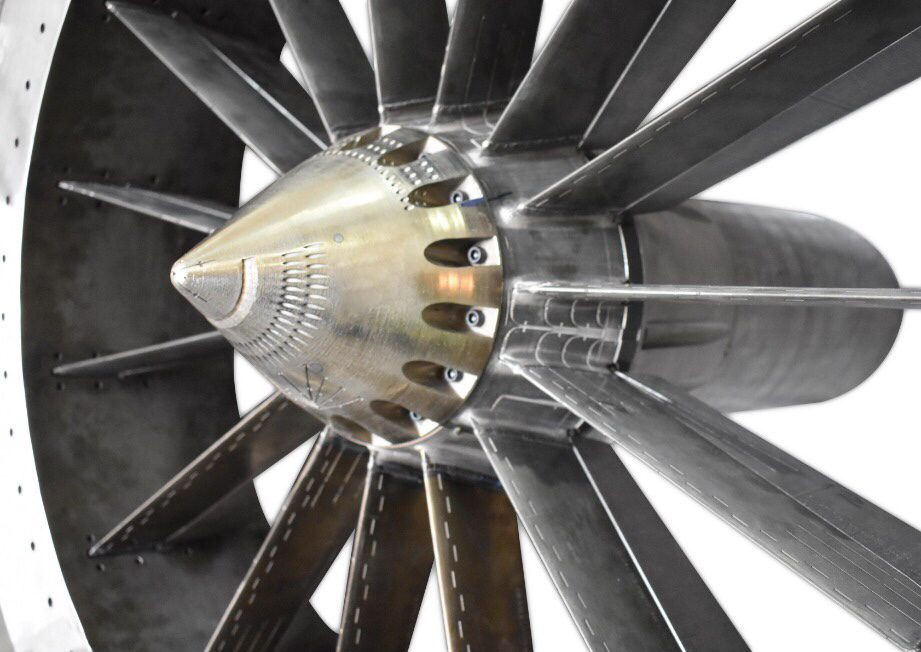
Why the Aerospace & Defence Industry Uses 3D Printing
The aerospace & defence industry requires high-performance, lightweight, and precision-engineered components that can withstand extreme operating conditions. Traditional manufacturing methods often involve long lead times, high tooling costs, and design limitations. 3D printing (additive manufacturing) overcomes these challenges by enabling faster product development, greater design flexibility, and cost-effective production.
The key reasons why aerospace and defence manufacturers are increasingly adopting 3D printing include:
Lightweight Components – Optimize part weight while maintaining structural strength and performance.
Rapid Prototyping – Accelerate product development through faster design validation and testing.
Complex Geometries – Manufacture intricate designs that are difficult to produce using conventional methods.
Low-Volume Manufacturing – Produce specialized aerospace and defence parts without expensive tooling.
On-Demand Spare Parts – Reduce inventory costs and improve maintenance efficiency by manufacturing parts when required.
Reduced Material Waste – Additive manufacturing uses only the material needed, making production more sustainable.
Improved Supply Chain Flexibility – Manufacture components closer to the point of use, reducing lead times and logistics challenges.
As aerospace technologies continue to evolve, 3D printing is playing a vital role in developing next-generation aircraft, satellites, UAVs, and defence systems with greater efficiency, accuracy, and innovation.

3D Printing Technologies Used in the Aerospace & Defence Industry
Different aerospace and defence applications require different 3D printing technologies depending on the material, accuracy, mechanical properties, and end-use requirements. Choosing the right technology helps manufacturers achieve better performance, faster production, and cost-efficient manufacturing.
1. FDM (Fused Deposition Modeling):
FDM is widely used for concept models, functional prototypes, tooling, jigs & fixtures, and low-volume production. It is a cost-effective technology that supports engineering-grade thermoplastics such as ABS, PLA, PETG, Nylon, and Carbon Fiber-filled materials.
2. SLA (Stereolithography):
SLA uses a laser to cure liquid resin layer by layer, producing parts with exceptional accuracy, smooth surface finish, and intricate details. It is ideal for high-precision prototypes, master patterns, and components requiring fine features.
3. SLS (Selective Laser Sintering):
SLS uses a high-powered laser to fuse nylon powder into strong and durable components. It is widely used for functional prototypes, lightweight aerospace parts, complex geometries, and end-use components without requiring support structures.
4. Metal 3D Printing (DMLS/SLM):
Direct Metal Laser Sintering (DMLS) and Selective Laser Melting (SLM) are advanced additive manufacturing technologies used to produce high-strength metal components from materials such as titanium, aluminum, stainless steel, and Inconel. These technologies are ideal for aircraft engine components, structural parts, and mission-critical defence applications.
Choosing the Right Technology:
The best 3D printing technology depends on factors such as part functionality, material requirements, accuracy, production volume, and budget. By selecting the appropriate manufacturing process, aerospace and defence companies can optimize product performance, reduce lead times, and accelerate innovation.
Materials Used in Aerospace & Defence 3D Printing
The choice of material plays a crucial role in aerospace & defence 3D printing. Different 3D printing technologies support different materials, each selected based on strength, weight, heat resistance, durability, and application requirements.
FDM
ABS, PETG, Nylon (PA), PEEK, PEKK, PEI (ULTEM™), Carbon Fiber
SLA
Standard Resin, Tough Resin, Flexible Resin, High-Temperature Resin, Clear Resin
SLS
PA11, PA12, Glass-Filled Nylon, Carbon-Filled Nylon
Metal 3D Printing (DMLS/SLM)
Titanium, Aluminum, Stainless Steel, Inconel, Cobalt Chrome
These materials are used to manufacture lightweight aircraft components, functional prototypes, UAV parts, engine components, and other aerospace & defence applications.
Applications of 3D Printing in the Aerospace & Defence Industry
3D printing is widely used across the aerospace & defence industry to manufacture high-performance components, accelerate product development, and improve operational efficiency. Some of its key applications include:
Aircraft Components
3D printing is used to produce lightweight brackets, ducts, housings, and structural components that help improve aircraft performance and fuel efficiency.
Rapid Prototyping
Engineers can quickly develop and test prototypes, reducing design iterations and speeding up product development.
UAV & Drone Parts
Lightweight and durable drone frames, enclosures, propeller components, and custom parts can be manufactured with high precision.
Tooling, Jigs & Fixtures
Custom manufacturing tools, jigs, and fixtures improve production accuracy while reducing manufacturing time and costs.
Engine & Turbine Components
Advanced metal 3D printing technologies are used to manufacture complex engine parts capable of withstanding high temperatures and demanding operating conditions.

Benefits of 3D Printing in the Aerospace & Defence Industry
Lightweight Components – Improve fuel efficiency and overall performance.
Rapid Prototyping – Accelerate product development and testing.
Complex Designs – Manufacture intricate parts with high precision.
Cost Savings – Reduce tooling costs for low-volume production.
Less Material Waste – Optimize material usage and support sustainable manufacturing.
On-Demand Production – Produce spare parts quickly and reduce inventory.
Pros & Cons of 3D Printing in the Aerospace & Defence Industry
🟢 Pros:
➕ Lightweight Components – Improves fuel efficiency and overall performance.
➕ Rapid Prototyping – Speeds up design validation and product development.
➕ Complex Geometries – Enables intricate designs that are difficult with traditional manufacturing.
➕ Low-Volume Production – Cost-effective for customized aerospace and defence parts.
➕ Reduced Material Waste – Uses only the required material, supporting sustainable manufacturing.
🔴 Cons:
➖ High Initial Investment – Industrial 3D printers and advanced materials can be expensive.
➖ Material Certification Challenges – Aerospace and defence components often require certified materials that comply with strict industry standards.
➖Not Ideal for High-Volume Production– Traditional manufacturing is often more efficient for high-volume production.
➖Stringent Certification Requirements – Critical aerospace and defence parts must meet rigorous regulatory and quality standards before deployment.
➖Skilled Workforce Required – Successful implementation requires expertise in design, material selection, and additive manufacturing processes.
Future of 3D Printing in the Aerospace & Defence Industry
The future of 3D printing in the aerospace & defence industry is driven by innovation, advanced materials, and digital manufacturing. As technologies continue to evolve, manufacturers are increasingly adopting additive manufacturing to develop lighter, stronger, and more efficient components while reducing production time and costs.
Key trends include:
AI-driven design optimization
Advanced aerospace-grade materials
Metal 3D printing for end-use parts
On-demand spare part production
Sustainable and lightweight manufacturing
Ready to Bring Your Aerospace & Defence Ideas to Life?
Whether you need rapid prototypes, functional components, lightweight parts, or low-volume production, Vektor3D delivers precision 3D printing solutions tailored to the aerospace & defence industry. Our team helps transform your concepts into high-quality, production-ready parts using advanced additive manufacturing technologies.
Get in Touch Today | Request a Quote
📞 Phone: +91 9082020416
📧 Email: sales@vektor3ds.com
🌐 Website: www.vektor3ds.com
3D printing enables fast production of replacement parts, reducing inventory costs and minimizing equipment downtime.


Comments